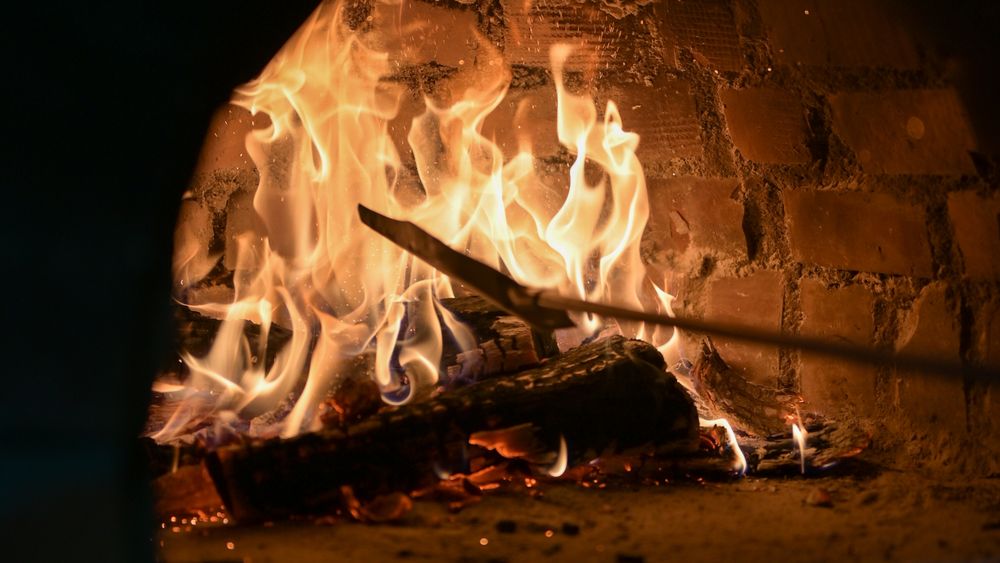
The short answer: For pizza on the grill you need a pizza stone or steel, a surface temperature of at least 300 °C and 30 to 45 minutes of preheating. At 350 to 400 °C the base is crisp in 60 to 90 seconds without the toppings drying out. Gas grills, kettle grills and kamados all work. The only thing that matters is that the stone and grill are properly heated through before the first pizza goes on.
Neapolitan pizzeria ovens reach 450 °C and bake in 60 to 90 seconds. With the right stone and some patience during preheating, your grill gets surprisingly close. The difference between “okay” and “really good” almost always comes down to three variables: the baking surface, the temperature and the preheating time. This guide shows how to set them correctly for gas grills, kettle grills and kamados.
Pizza stone or pizza steel: which is better?
Steel heats up faster and passes more energy to the dough in less time, so the base gets crispier and the bake time is shorter. Stone stores heat more evenly over a longer session and is more forgiving of temperature swings, but it is more sensitive to thermal shock.
| Criterion | Pizza stone (cordierite) | Pizza steel |
|---|---|---|
| Heat-up time | 30 to 45 minutes | 20 to 30 minutes |
| Heat conduction | medium, very even | high, very fast |
| Risk of breaking | higher with thermal shock | practically none |
| Weight | lighter | much heavier |
| Price | cheaper | more expensive |
| Best choice for | getting started, kamado, kettle grill | frequent use, gas grill, short bake times |
To get started, a cordierite stone is the more pragmatic choice: sturdy enough for everyday grilling, much cheaper, and with enough preheating time almost on a par with steel. If you make pizza several times a month and want the shortest bake time, steel pays off in the long run.
What temperature does pizza on the grill really need?
At least 300 °C at the stone surface, ideally 350 to 400 °C. That is much more than most people use for grilling otherwise, which is exactly why preparation matters so much.
| Grill type | Achievable stone temperature | Bake time (approx.) |
|---|---|---|
| Gas grill (2+ burners, indirect + stone) | 280 to 350 °C | 3 to 5 minutes |
| Kettle grill (charcoal all around, lid closed) | 300 to 380 °C | 2 to 4 minutes |
| Kamado (vents fully open) | 350 to 450 °C | 90 seconds to 3 minutes |
| Dedicated pizza oven (gas/pellet/wood) | 400 to 500 °C | 60 to 90 seconds |
Below 250 °C the pizza turns out tough and pale instead of crisp, because the dough dries out before the base takes on colour. An infrared thermometer pointed at the stone is the most reliable way to check the actual surface temperature rather than just the temperature of the cooking chamber.
How do I prepare a gas grill, kettle grill or kamado for pizza?
The basic principle is the same for all three types of grill: indirect heat plus a stone, preheated for long enough.
- Put the stone or steel on the grate before the grill is lit at all. Never slide a cold stone into an already hot grill.
- Bring the grill to full power and let it heat through for at least 30 to 45 minutes with the lid closed.
- On a gas grill: turn the middle burners off and the outer ones to full. The stone sits over the switched-off zone (indirect heat), otherwise the base burns from below before the toppings are done.
- On a kettle grill: arrange the charcoal in a ring around the edge, place the stone in the middle over the empty area and open the vents wide.
- On a kamado: insert the deflector plate or stone and open both vents fully to reach the target temperature of 350 °C or more.
- Only put the pizza on once the target temperature has been stable for at least 10 minutes. A temperature drop right after heating up leads to an uneven base.
How does the base get crisp in 60 seconds?
With a hot enough stone (350 °C or more), the base really only needs 60 to 90 seconds. The rest is technique when placing and turning the pizza:
- Shape the dough thin and even, with a thinner middle and a thicker rim for the classic cornicione.
- Sprinkle plenty of durum wheat semolina or flour on the pizza peel so the pizza does not stick when you slide it off.
- Slide it onto the hot stone quickly and with one decisive jerk. Hesitating makes the dough stick.
- After 20 to 30 seconds, turn it by 90 to 180° with the peel so the base browns evenly instead of burning in one spot.
- Keep the lid closed for the whole bake. Every time you open it, you lose valuable heat.
- Check the base after 60 to 90 seconds. Golden brown with dark leopard spots is the goal.
Why does my pizza stone crack or stick?
Cracks in the stone almost always come from thermal shock: cold, moist dough on an extremely hot stone, or heating up too fast without enough time for the heat to spread through the stone. So heat up slowly and in stages, never at full power from a standing start.
If the pizza sticks when you put it on, it is almost always because there is too little semolina on the peel or you hesitated too long between shaping and placing. The dough releases moisture as soon as it lies on the work surface. Prepare the toppings completely before you put the dough on the peel, and slide the pizza onto the stone quickly.
Which toppings work best with the short bake time?
With a bake time of 60 to 90 seconds, there is no time for watery or raw ingredients to cook through. The toppings must either be pre-cooked or naturally quick to finish. Slice the mozzarella and let it drain rather than using it whole, so it does not release too much liquid onto the base. Briefly fry raw vegetables such as peppers or mushrooms beforehand, otherwise they stay raw and watery in the short bake. Thinly sliced cured ham, rocket or fresh basil generally go on the finished pizza after baking, so they do not burn or wilt.
When it comes to quantity, less is almost always more. If the pizza is topped too thickly, the middle takes longer to cook through while the rim is already burning. A thin, even layer of sauce and toppings gives the typical result of a crisp base and cheese that has only just melted.
Conclusion: preheating time is the underrated factor
The best pizza on the grill comes not from expensive accessories but from patience during preheating: 30 to 45 minutes for the stone, a surface temperature of at least 300 °C, then 60 to 90 seconds of baking with one turn along the way. This works equally on gas grills, kettle grills and kamados. The type of grill only decides how quickly you get there. The pizza oven overview shows suitable accessories and pizza ovens compared; if you want to know which appliance fits your budget, the grill finder can help.