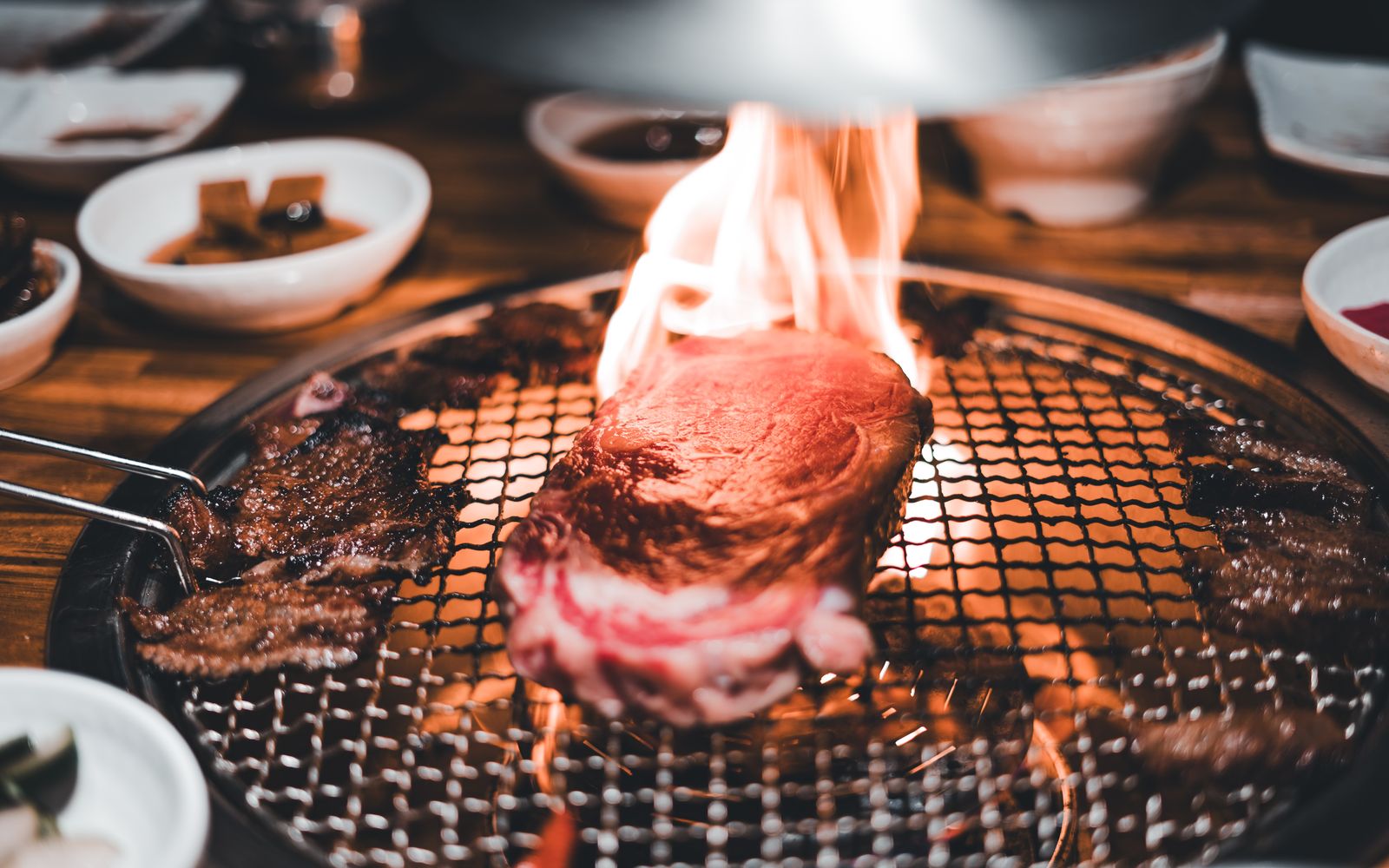
The short answer: The most common cause of a tough, dry steak is overcooking: once the core temperature rises above about 60 °C, the meat squeezes out its juice and turns firm. So measure with a core thermometer (medium: 55 to 57 °C), take the steak off the grate 2 to 3 °C earlier, let it rest for 3 to 5 minutes and cut it across the grain.
You bought a nice steak, did everything right, and it is still barely chewable? That is annoying, but it almost always comes down to one of a few causes that you can fix deliberately next time. This guide goes through the five typical reasons one by one and shows you the concrete fix for each.
Why is my steak tough or dry from the grill?
“Tough” and “dry” usually have the same root: too much heat in the core. When meat cooks, the protein strands contract and push water out, and past a certain point this happens faster than you notice. On top of that come handling mistakes: the wrong cut, a cut in the wrong direction, no resting time, or a steak that is too thin to have any chance of a clean doneness. The good news: each of these causes has a simple solution.
Cause 1: Overcooked, the core temperature is off
This is by far the most common reason. Many people grill by feel or by the clock, but cooking time depends on thickness, starting temperature and grill heat, and varies enormously. The result is often a core beyond 60 °C, and therefore firm and dry.
The solution is a core thermometer. Stick to these guideline values for the point at which you take the steak off the grate:
- Medium rare: 51 to 52 °C
- Medium: 53 to 54 °C
- Well-done: from 58 °C
What matters is the residual heat rule: after grilling, the core temperature rises by another 2 to 3 °C while resting. So take the steak off earlier than you think. Measure at the thickest point without hitting a vein of fat, and for flat steaks insert the probe from the side. You will find all doneness levels and the exact values in our core temperature chart.
Cause 2: The wrong cut of meat
Not every cut is made for short, hot grilling. Cuts from heavily worked muscle, such as the shoulder or the shank, contain a lot of connective tissue and stay tough with a short grilling time. They need low temperatures over hours (braising or low and slow), not three minutes per side.
Cuts from the back suit classic grilling:
- Ribeye / entrecôte: heavily marbled, very juicy, forgives mistakes
- Rump steak / roast beef: firm bite, good balance
- Fillet: melt-in-the-mouth tender, but lean, so it dries out quickly if overcooked
You should cook very lean cuts such as hip steak especially precisely, because they lack protective fat. If you are unsure which meat suits your style of grilling, the Grill Finder helps you choose the right appliance.
Cause 3: Cut against or with the grain?
Even a perfectly cooked steak feels tough if you slice it wrongly. Meat consists of long, parallel muscle fibres. Before cutting, look closely at which direction these strands run.
Always cut across the grain, meaning at a right angle to the direction they run. This breaks the long fibres into short segments, and your jaw hardly has to work. If you cut lengthways with the grain, long strands remain, and the steak seems tough even at medium. A sharp knife and a clean pull instead of a sawing motion help as well.
Cause 4: Not letting the steak rest
While grilling, the muscle contracts and pushes the meat juice towards the centre. If you cut into it straight away, a large part of it runs onto the board, and the steak tastes dry even though you cooked it correctly.
So let the meat rest: 3 to 5 minutes for steaks up to 3 cm thick, up to 8 minutes for thick cuts over 4 cm. During this time the fibres relax and the juice distributes evenly again. Cover the steak only loosely with aluminium foil and do not wrap it tightly, otherwise the crust softens in the trapped steam.
Cause 5: Cut too thin
A steak under 2 cm thick gives you hardly any chance of a clean doneness. By the time a crust forms on the outside, the thin core is already cooked through, and the result is grey and dry. For controlled results, choose steaks at least 2.5 cm thick, ideally 3 cm.
With thicker cuts, a two-zone grilling surface is also worthwhile: first cook gently over indirect heat, then sear over direct heat. The guide to direct and indirect heat explains how to split your grill into a hot and a cooler zone. Steaks that are too thin, on the other hand, belong on maximum heat and on the grate only very briefly.
Can a tough steak still be saved?
An already overcooked steak will not become juicy again, because water that has escaped does not come back. You can make it more enjoyable, though: slice it thinly across the grain, serve it with a sauce, herb butter or some meat juice, or turn it into strips for a salad, sandwich or wrap. For next time: measure earlier, take it off earlier.
Conclusion: How to get your steak tender again
Tough meat is almost never bad luck, but a combination of too much heat, the wrong cut, the wrong slicing or missing rest. If you use a thermometer, choose a marbled cut of sufficient thickness, cut across the grain and give the steak its resting time, you will reliably get a tender result. You will find the complete step-by-step method, including times and reverse searing, in our guide to grilling steak.