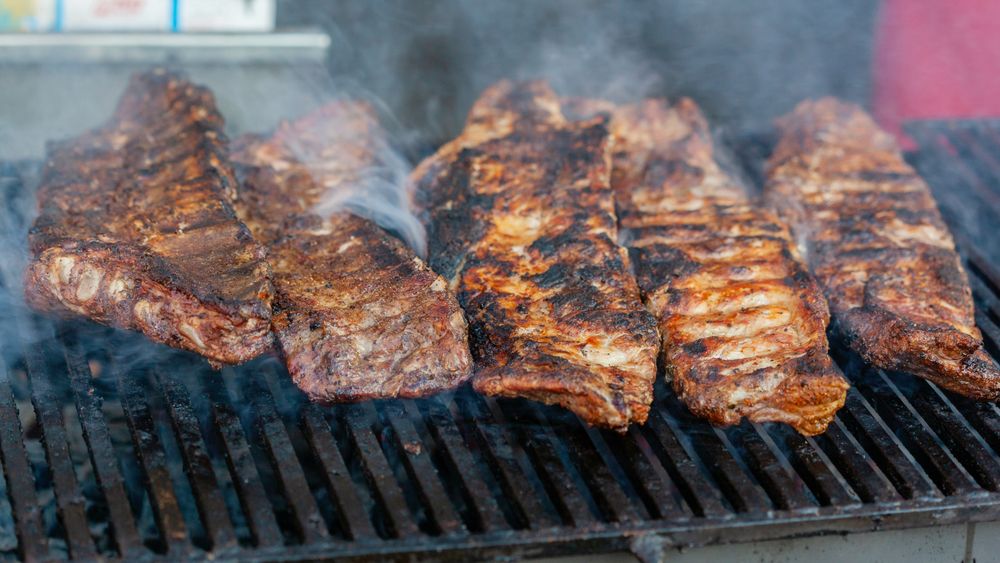
The short answer: Winter grilling works with any type of grill, as long as you use pure propane gas rather than butane, because butane barely vaporises below 0 °C. Allow 5 to 10 minutes more preheating time, set the grill up out of the wind and on firm ground, and keep the lid closed as much as possible to avoid heat loss.
A well-insulated grill knows no season. Steak and roasts taste just as good at minus 5 °C as in midsummer. The technique behind it differs noticeably, though: gas cylinders behave differently in frost, preheating times get longer, and wind cools things down faster than you would think. If you know these three points, you can keep grilling all year round without any problems.
What is the butane-propane problem in cold weather?
Butane stops vaporising reliably at around 0 °C, whereas propane still works down to around minus 40 °C. That is the core of the problem: many cheap gas cylinders contain mixed gas, usually with a high butane share, because it is cheaper to produce.
When the outside temperature falls below freezing, the internal pressure in a butane-heavy cylinder drops rapidly. The result is a weak flame that burns yellow instead of blue, uneven heat, or a flame that goes out completely, just when you need it most. For reliable winter grilling you should therefore buy cylinders with pure propane; the label usually says “propane” or carries the gas standard marking. Many common grill gas cylinders in Germany are propane anyway, or a propane-butane mix with a high propane share. If in doubt, ask the retailer directly.
How long does a grill need to preheat in winter?
Significantly longer than in summer: for gas grills, allow 20 to 25 minutes instead of 10 to 15, and for charcoal 35 to 40 minutes instead of 20 to 30.
| Grill type | Summer preheating time | Winter preheating time (frost) |
|---|---|---|
| Gas grill | 10 to 15 min. | 20 to 25 min. |
| Charcoal kettle grill | 20 to 30 min. | 35 to 40 min. |
| Kamado | 15 to 20 min. | 25 to 30 min. |
| Pellet grill | 10 to 15 min. | 15 to 25 min. |
| Electric grill | 8 to 10 min. | 12 to 15 min. |
The reason is simple: cold metal parts first absorb heat themselves before the cooking chamber reaches target temperature at all, and the colder ambient air cools things down further. Wind amplifies this effect considerably, so set the grill up out of the wind where possible, for example against a house wall or behind a screen, but never under a porch roof or carport without enough clearance and ventilation.
Is winter grilling easier with charcoal or gas?
Gas is the more practical choice in winter, because the temperature can be set stably via the control knob without you having to add fuel. Charcoal also works very well, but burns noticeably faster in cold and wind. Budget around 20 to 30% more fuel and plan to top up more often than in summer.
If you are already torn between gas and charcoal, you can count winter grilling as an additional argument: if you mainly want to grill spontaneously in the cold season, gas is the more comfortable option. If smoky flavour matters most to you, you accept the somewhat higher demands on fuel and patience.
How do I keep the temperature stable in the cold?
The lid is your most important tool in winter. It keeps the heat generated in the cooking chamber where it belongs, instead of losing it to the cold ambient air.
- Keep the lid closed as often as possible. Every opening costs noticeably more temperature in winter than in summer.
- Set up a windbreak or place the grill in a sheltered spot, but always with enough clearance from walls and good ventilation.
- On gas grills, set the burner output slightly higher than usual to compensate for the extra heat loss.
- With charcoal, plan for a little more fuel and top up earlier than usual, before the embers noticeably fade.
- Use a grill thermometer instead of guessing. In the cold, your feel for the cooking temperature is particularly easy to get wrong.
What should I pay particular attention to in cold and snow?
Safety has extra aspects in winter that play no role in summer:
- Clear the grill completely of snow and ice before you light it. Melting ice can drip into the burner or coal bed and disturb the flame.
- Make sure the ground is firm and cleared. Working on smooth ice or snow next to a hot grill is an avoidable risk of falling.
- Check gas hoses and seals before the winter season. Rubber becomes more brittle and prone to cracking in the cold; a simple leak check with soapy water at the connection points gives you certainty.
- Never operate a gas or charcoal grill in enclosed spaces, garages or on covered, poorly ventilated terraces. This applies in winter just as in summer. The temptation to grill closer to the house or under porch roofs because of the cold increases the risk of a dangerous build-up of carbon monoxide.
- Dry everything thoroughly after grilling, before moisture freezes in place overnight. This protects seals, regulators and paintwork.
Which foods suit winter grilling best?
The best choices are cuts that benefit from short, intense heat and do not get worse from waiting longer for the target temperature: steaks, chops, bratwurst and vegetables on the grate. They are done quickly, so your exposure to the cold as the griller stays short and the meat does not have to wait unnecessarily long for the preheating process.
For elaborate low-and-slow dishes such as pulled pork or brisket, there is basically nothing against them in winter. A well-insulated kamado even holds its temperature particularly stably in frost, because the thick ceramic absorbs heat losses to the surroundings well. With thinner-walled grills, however, expect noticeably higher fuel consumption over the whole session, and plan a wind-sheltered location from the start instead of readjusting only once the temperature drops.
Conclusion: winter grilling is a matter of preparation
With pure propane gas, a little more preheating time and a wind-sheltered, firm location, nothing stands in the way of steak and roasts in sub-zero temperatures. The biggest mistake is to carry over summer routines unchanged: if you do not adjust time and fuel, you end up with half-cooked meat or a flame that goes out. The gas grill overview shows suitable gas grills for year-round use; not sure which model fits how you will use it? The Grill Finder helps in just a few questions.