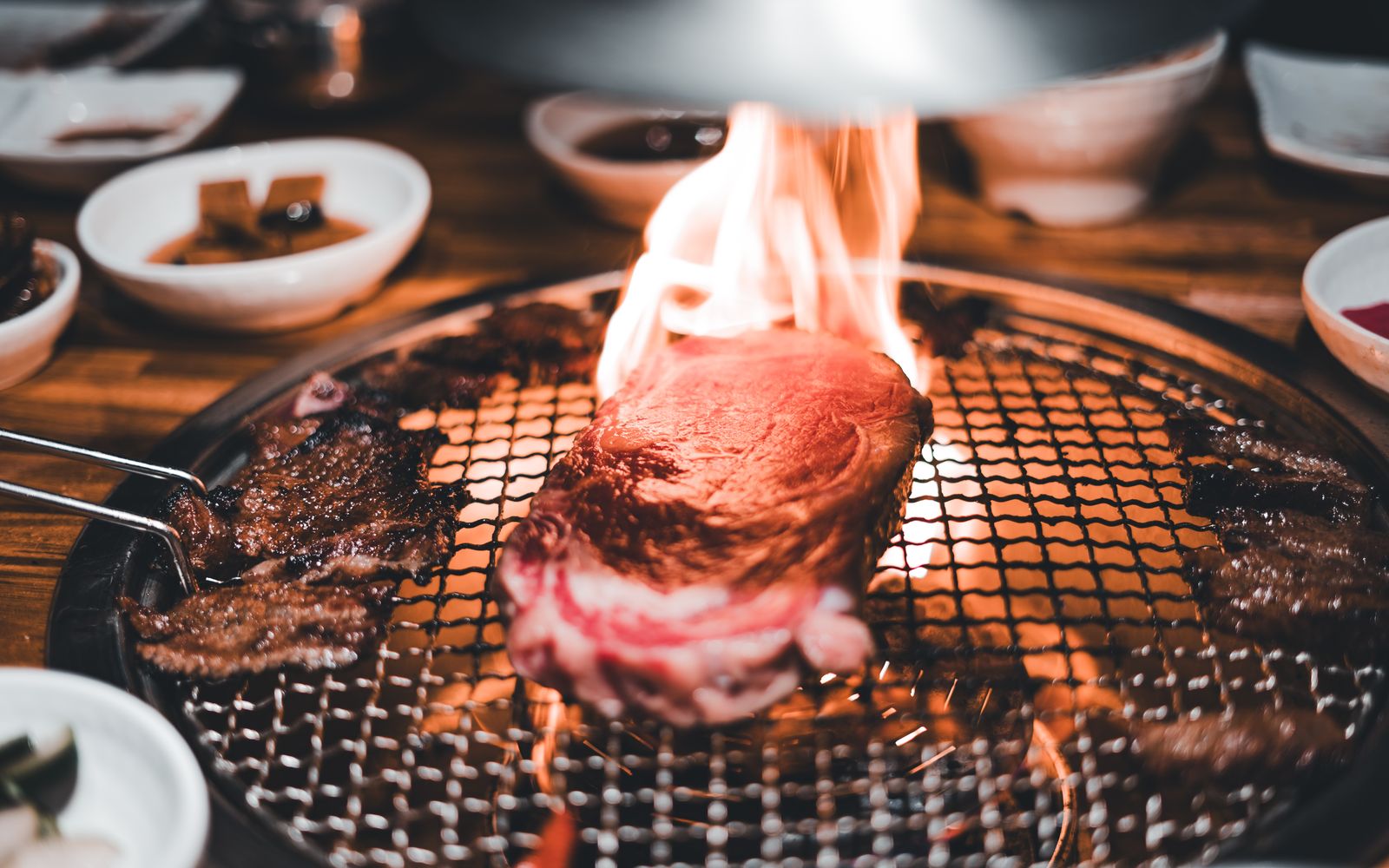
The short answer: Burnt outside and raw inside almost always means: too hot, direct heat only, lid open. Set up your grill in two zones, a hot direct zone and an indirect zone, close the lid and finish thick meat there. Sear briefly at the end and check the core temperature with a thermometer. That way nothing ends up black and raw at the same time.
You probably know the feeling: the steak looks perfect on the outside, almost too dark, and when you cut into it the middle is cold and raw. Frustrating, especially when guests are waiting. The good news: this problem almost always has the same cause and can be solved reliably with one simple principle. In this guide you will learn why your meat burns outside and stays raw inside, how to cook evenly with two heat zones and the lid, and how to rescue food that is already getting too dark.
Why is my meat burnt outside and raw inside?
The core of the problem is a mismatch between surface and core temperature. Over direct, very high heat, the outside takes on well over 200 degrees in a short time. The crust browns, then roasts, then chars. But the heat needs time to travel to the middle of a thick piece. With a 4 cm thick steak or a chicken thigh, the surface is long since black while the centre is still almost at fridge temperature.
Typical triggers are:
- Too much heat across the whole surface: the entire grill is glowing and there is nowhere to move the food.
- Thick food grilled over direct heat only: without an indirect zone, the middle cannot cook through gently.
- Lid open: without a closed lid, the circulating heat that cooks from all sides is missing.
- Turning too often over fierce embers: the crust burns without anything happening inside.
What is two-zone grilling and how do I set it up?
Two zones are the most important technique against the burnt-outside, raw-inside problem. You divide the grilling surface into a hot, direct area and a cooler, indirect area.
- On a gas grill: Light only half of the burners (or the outer ones) and leave the other side off. The indirect zone is over the burners that are switched off.
- On a charcoal or kettle grill: Push the glowing charcoal to one side or to the edges. The free area in the middle or on the other side is your indirect zone.
The process is simple: thick meat goes into the indirect zone first, cooks through gently there with the lid closed, and only gets its crispy crust at the end over the direct zone. It is the reverse of the classic approach, but that is exactly why it works. For how to combine direct and indirect heat in detail, see our guide to direct and indirect heat.
Why do I need to close the lid?
An open grill is basically just a hob: heat comes only from below. A closed lid turns your grill into an oven. The hot air circulates and cooks the meat evenly from all sides, which is exactly what thick pieces need.
In the indirect zone in particular, the lid is a must. Without it, the heat that is meant to cook the core escapes. With the lid closed, the temperature inside the grill rises to 150 to 180 degrees, and your food cooks through calmly without the surface burning. Open the lid only when necessary, because every time you open it you lose heat and lengthen the cooking time.
What is reverse searing and when is it worth it?
Reverse searing, grilling in reverse, is the most reliable method for thick steaks and roasts. You flip the classic order:
- Cook gently first: Place the meat in the indirect zone with the lid closed until the core is about 8 to 10 degrees below your target temperature.
- Let it rest briefly and bring the direct zone up to full heat.
- Sear: Finally, put the meat over the direct embers for just 1 to 2 minutes per side, until the crust has formed.
The result is a lovely seared crust and an evenly pink core, without the grey, overcooked band. For anything from about 3 cm thick, it is the best insurance. You can find detailed step-by-step instructions in our guide to grilling steak.
What core temperature do I need?
The colour of the crust tells you nothing about the doneness inside. Only the core temperature is reliable, measured with a probe thermometer at the thickest point without touching bone. Rough guide values:
- Beef steak, medium: around 54 to 56 degrees
- Pork, cooked through: about 65 to 70 degrees
- Chicken and poultry: at least 72 to 75 degrees. Cooking through is mandatory here for safety reasons; half-raw poultry does not belong on the plate.
Keep in mind that the temperature still rises a few degrees after grilling. So take the meat off a little earlier. Our core temperature chart summarises all the values for the common types of meat clearly.
How do I rescue meat that is already getting too dark on the outside?
If the crust browns faster than you would like, act immediately:
- Move it: Slide the piece from the direct to the indirect zone.
- Lid closed: Let it finish cooking through there at medium heat and check the core temperature.
- Hold off on sweet sauces: Apply honey, BBQ or ketchup marinades only in the last few minutes, otherwise their sugar burns immediately.
If individual spots are already heavily charred, cut them away generously. Burnt crusts taste bitter and are not ideal for your health. A piece that has gone too dark but is still raw inside can almost always be saved this way.
What other mistakes should you avoid?
A few small things make the difference between black and raw and juicy and even:
- Bring meat to temperature: Take thicker pieces out of the fridge 30 to 45 minutes before grilling. Ice-cold meat takes longer and burns on the outside more easily.
- Do not ignore dripping fat: Fat dripping into the open flame can cause flare-ups and grease fires. Grill fatty food indirectly instead. The guide on preventing grease fires explains how to do this safely. Important: Never put out a grease fire with water, only smother it (lid closed, gas off).
- Do not turn constantly: Give the meat time to form a crust and turn it deliberately rather than nervously back and forth.
- Keep the grate hot and clean: A clean, well-preheated grate ensures even browning.
When is it the grill, and when is a new one worth it?
Mostly the problem is technique, not the appliance. But if you cannot set up an indirect zone at all, because your grill is too small, has no lid or cannot regulate the heat, you will eventually hit limits. A model with a lid and several separately adjustable zones makes two-zone grilling and reverse searing much easier. If you are thinking of switching, our grill finder helps you find the right appliance for your grilling habits. For most people, though, simply switching to two zones and a closed lid is enough, and the problem of “burnt outside, raw inside” becomes a thing of the past.