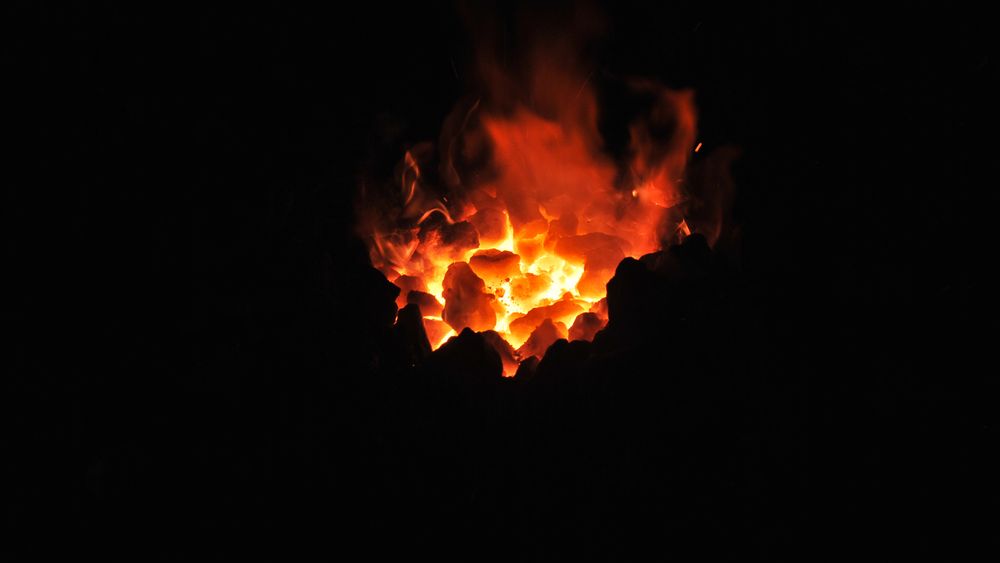
The short answer: If charcoal does not glow through, there is almost always not enough air or the charcoal is damp. Use a chimney starter, open all vents fully and store the charcoal dry. In the vast majority of cases that gives you an even, fully glowing bed of embers. Avoid liquid lighter fluid completely.
You have prepared the grill, the guests are waiting, and the charcoal just smoulders instead of glowing through properly. Or it flares up briefly and then goes out again. That is frustrating, but it is almost always quickly fixed. In this guide we go through the six most common reasons why lump charcoal and briquettes do not glow through, and show you step by step how to get a hot, even bed of embers reliably.
Why is my charcoal not glowing through properly?
Charcoal needs three things to burn: fuel, ignition temperature and above all oxygen. If one of them is missing, the embers do not get going. The typical culprits are:
- Too little air: by far the most common cause.
- Damp charcoal, which uses up a large part of its energy evaporating the water.
- Lighting it wrongly, without a sufficient hot core.
- A pile that is too dense, so no air flows through.
- Poor-quality charcoal with a high share of dust or moisture.
- Too little charcoal, so the pieces do not ignite each other.
The good news: almost all of these points can be fixed in minutes with the right steps. Let’s go through them in turn.
Is a chimney starter the solution for charcoal that glows through?
If you take away only one tip, make it this one: get a chimney starter. Hardly any other tool changes your grilling result as much. The chimney concentrates the heat and, through the chimney effect, creates a strong draught from bottom to top, exactly the ventilation that individual pieces of charcoal in the grill often do not get.
Here is how to do it:
- Fill the chimney with charcoal or briquettes.
- Place one or two firelighter cubes or some crumpled paper under the chimney.
- Light it from below and let the chimney do its work.
- Wait 15 to 25 minutes until the top pieces are covered in grey.
- Tip the glowing charcoal carefully into the grill.
Important: place the chimney on a fireproof, non-flammable surface and only touch it with heat-resistant gloves, as it gets glowing hot all over.
How much air does charcoal need to glow?
Much more than most people think. Oxygen is the decisive factor. Two adjustments control the air supply on almost every kettle or charcoal grill:
- Lower vent (intake): It lets fresh air into the charcoal from below. For lighting and burning through, it should be fully open.
- Upper vent in the lid (exhaust): It draws off the hot air and so keeps the chimney effect going. You also open it fully at the start.
A common mistake: closing the lid early and shutting all the vents because you are afraid of too much heat. That suffocates the embers. Only once the charcoal is glowing through cleanly do you bring the temperature down using the vents. Also clean the ash openings regularly. If old ash covers the intake slots, the fresh charcoal is literally choked from below. You can find more models with good ventilation in our overview of charcoal grills.
Could my charcoal be damp?
Moisture is an underestimated ember killer. Charcoal draws water from the air, especially if the bag is left open in a garden shed, cellar or carport. Damp charcoal smokes heavily, smells musty and simply will not light properly, because a large part of the energy first has to evaporate the water.
Here is how to prevent it and rescue what can be rescued:
- Store it dry: Keep charcoal in a closed container or a tightly sealed bag in a dry place, never directly on a cold stone floor.
- Dry clammy charcoal: Spread slightly damp charcoal out in a warm place for one to two days before you use it.
- Sort out soaked charcoal: Clumped or completely sodden pieces hardly burn cleanly any more, so you can throw them away.
A simple check: if the charcoal sounds bright and hard when you knock pieces together, it is dry. If it sounds dull, it has absorbed too much moisture.
Are you piling the charcoal too densely?
Paradoxical as it sounds, too much charcoal in one heap can glow just as badly as too little. If the pieces lie packed tightly together, no air gets between them and the embers suffocate in the middle. Charcoal needs small gaps through which oxygen can flow.
Aim for an airy layering: the pieces should touch so the glow can jump across, but should not be wedged together airtight. When spreading it out in the grill, it helps to shape small channels with a pair of grill tongs. For many dishes it is worth setting up a hot zone and a cooler zone anyway. You can read exactly how that works in our guide to direct and indirect heat.
How can I recognise poor-quality charcoal or briquettes?
Not all charcoal is the same. Cheap products often contain a lot of dust, fragments and foreign matter, which ignite poorly and smoke heavily. This is how you recognise good quality:
- Large, solid pieces rather than lots of dust and crumbs at the bottom of the bag.
- A clean, hard sound when you knock pieces together.
- Little smoke and no chemical smell when lighting.
- Even size for briquettes, without crumbly edges.
Briquettes are pressed and naturally take longer to reach full glow, but hold their heat more steadily. If you are unsure whether lump charcoal or briquettes suit your grilling style better, our comparison charcoal or briquettes will help you decide.
Why does my charcoal go out again after lighting?
If the embers flare up briefly and then die, it is usually down to a combination of too little air and too little mass. Individual pieces of charcoal cool quickly if no hot neighbour keeps them glowing. Check in this order:
- Enough charcoal? Start with a sufficient amount so the pieces ignite each other.
- Intake open? The lower vent must be clear, so check whether ash is blocking it.
- Core hot enough? Wait until several pieces are really glowing through before you add more charcoal.
- Lid closed too early? Leave the grill open while the charcoal burns through, or with the vents wide open.
Safety note: Never pour liquid lighter fluid or, worse, petrol onto smouldering charcoal. There is a risk of a flash fire or flashback into the bottle. Use only solid firelighters such as cubes or wood wool. And never grill with charcoal in enclosed spaces, tents or the garage, as it produces odourless, toxic carbon monoxide.
When is a better grill worth it instead of troubleshooting?
If your charcoal still does not glow through permanently despite a chimney starter, open ventilation and dry storage, the grill itself may be the limit, for example through blocked or missing vents, an unfavourable charcoal chamber or heavy leaks. A model with well-thought-out airflow makes lighting much easier. Compare different options at your leisure in our grill finder before you invest in equipment. Often, though, a chimney starter and the right ventilation are enough to solve your ember problem for good.