The short answer: A gas grill wins on time (8 to 10 min. preheating), temperature precision and cleaning. A charcoal grill wins on smoky flavour, peak heat above 300 °C and purchase price. On yearly costs, gas is usually lower (€20 to €30 fuel per season vs. €45 to €70 for charcoal). The decision depends on whether speed or ritual matters more to you.
The gas-or-charcoal debate is often fought with articles of faith rather than facts. You can compare objectively where each type of grill really does better, and where the difference is smaller than many people think.
Which is better: a gas grill or a charcoal grill?
Both have clear strengths in different areas. “Better” only exists in relation to how you use a grill. Gas grills score on everyday practicality: quick to start, precisely adjustable, easy to clean. Charcoal grills score on the experience: real smoky flavour, higher maximum temperatures for the perfect crust, and usually a lower purchase price. The table below shows the differences in detail.
The comparison table: gas vs. charcoal
| Criterion | Gas grill | Charcoal grill |
|---|---|---|
| Heat-up time | 8 to 10 min. | 20 to 30 min. (15 to 20 min. with a chimney starter) |
| Maximum temperature | approx. 250 to 300 °C | 300 to 400+ °C |
| Temperature control | Precise, instant via the dial | Less precise, via the air vents |
| Smoky flavour | Slight to none | Clear, depending on the charcoal/wood |
| Purchase price | From approx. €300 for good quality | From approx. €100 to €150 |
| Fuel costs/year* | €20 to €30 | €45 to €70 |
| Cleaning effort | Low (grates, grease tray) | Higher (ash, grates, charcoal grate) |
| Balcony/terrace suitability | Usually less problematic | Often more strictly regulated |
| Learning curve | Low | Medium (temperature management) |
*based on approx. 15 grilling evenings per season, moderate use
Does meat grilled over charcoal really taste different?
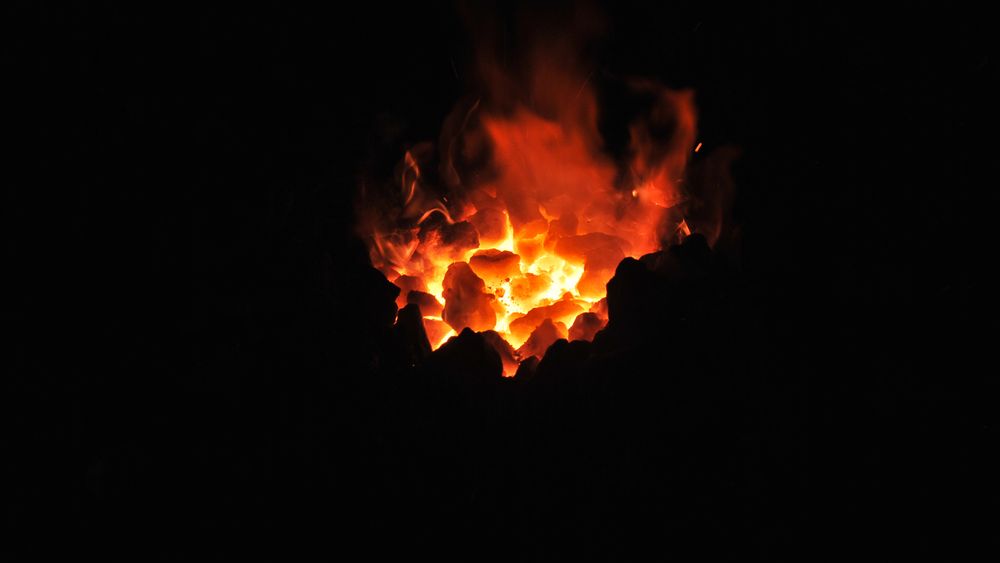
With thin food that cooks quickly, the difference is smaller than the myth suggests. The typical “charcoal note” arises mainly when fat drips onto the embers and burns there, not from the charcoal itself. With bratwurst or a thin steak that sits on the grate for only a few minutes, the effect is slight.
With fatty, slow-cooked cuts such as pork neck steaks, spare ribs or whole chickens, the difference becomes clear: more contact time means more burning fat and therefore more smoky flavour transfer. This is where charcoal shows its strength. For low and slow cooking and long cook times, though, a smoker is usually the better choice than the classic grilling evening.
How much does grilling with gas cost compared with charcoal?
With 15 grilling evenings per season, the pure fuel costs are around €20 to €30 for gas and €45 to €70 for charcoal. A 5 kg gas cylinder (refill approx. €10 to €12) lasts for 10 to 15 grilling evenings with moderate use. A 3 kg bag of charcoal (approx. €6 to €9), by contrast, often lasts only 2 to 3 grilling evenings, because more fuel is lost when lighting and topping up.
If you want to calculate exactly how long your cylinder will last instead of guessing: the burner’s kW rating multiplied by roughly 75 g of gas consumption per hour and kW gives you the consumption. The gas cylinder calculator at campklar walks through the formula with tables for cartridges, 5 kg and 11 kg cylinders, including a fill-level check by weighing.
On the purchase side, the picture reverses: solid charcoal kettle grills start at around €100 to €150, while good gas grills start at about €300 and up, because burners, valves and gas fittings make production more expensive. Over a service life of 5 to 8 years, the overall cost of the two systems often evens out.
Heat-up time and temperature control in everyday use
A gas grill is ready after 8 to 10 minutes of preheating and can be set instantly and precisely to the target temperature with the burner controls, which is ideal for a spontaneous after-work grilling evening during the week. A charcoal grill needs 20 to 30 minutes until the coals are evenly glowing; with a chimney starter, that drops to 15 to 20 minutes.
Controlling the temperature with air vents on a charcoal grill takes a little practice: more air raises the temperature, less lowers it, but the reaction is delayed, unlike with an instantly responsive gas dial. The guide to direct and indirect heat explains how to divide both systems into zones for direct and indirect grilling.
Cleaning: where is the effort lower?
Gas grills have a clear advantage: brush the grates briefly and empty the grease tray regularly. You will find detailed instructions in the guide cleaning a gas grill. There is no ash to dispose of.
Charcoal grills produce ash after every grilling evening, and it has to cool down completely (at least 24 to 48 hours) before it can be disposed of in a non-flammable container. On top of that, you need to clean the charcoal grate, which clogs with ash residue and can block the air supply if it is not shaken out regularly.
Recommendation matrix: which type suits your user profile?
| Your profile | Recommendation | Why |
|---|---|---|
| You grill spontaneously during the week, little time | Gas grill | Quick to start, quick to finish, little cleanup |
| You only grill at weekends and enjoy the ritual | Charcoal grill | Time does not matter, flavour is the focus |
| You want high heat for a perfect steak crust | Charcoal grill | Higher maximum temperatures possible |
| You often grill for many guests, with planning | Gas grill | Precise control across several zones at the same time |
| Tight budget for the purchase | Charcoal grill (kettle grill) | Lower entry price |
| Balcony or small terrace with strict house rules | Electric grill instead of either option | Usually the only smoke-free and flame-free solution. Details in the guide to grilling on a balcony |
| You want to combine both advantages | Gas grill with smoker box or combination unit | Smoky note can be added later without giving up speed |
Conclusion: there is no objectively “better” option
The gas-or-charcoal question cannot be answered across the board, because the two systems serve different priorities. Gas wins on time, precision and cleaning effort. Charcoal wins on flavour, maximum temperature and purchase price. Honestly, the difference in flavour is smaller than its reputation with thin food, but it is real with fatty food. In the end, your everyday life decides: if you often grill spontaneously, go for gas; if you love the weekend ritual, go for charcoal. The charcoal grills category gives an overview of suitable models, and if you are still unsure between all grill types, the Grill Finder gives you a fitting recommendation in two minutes.