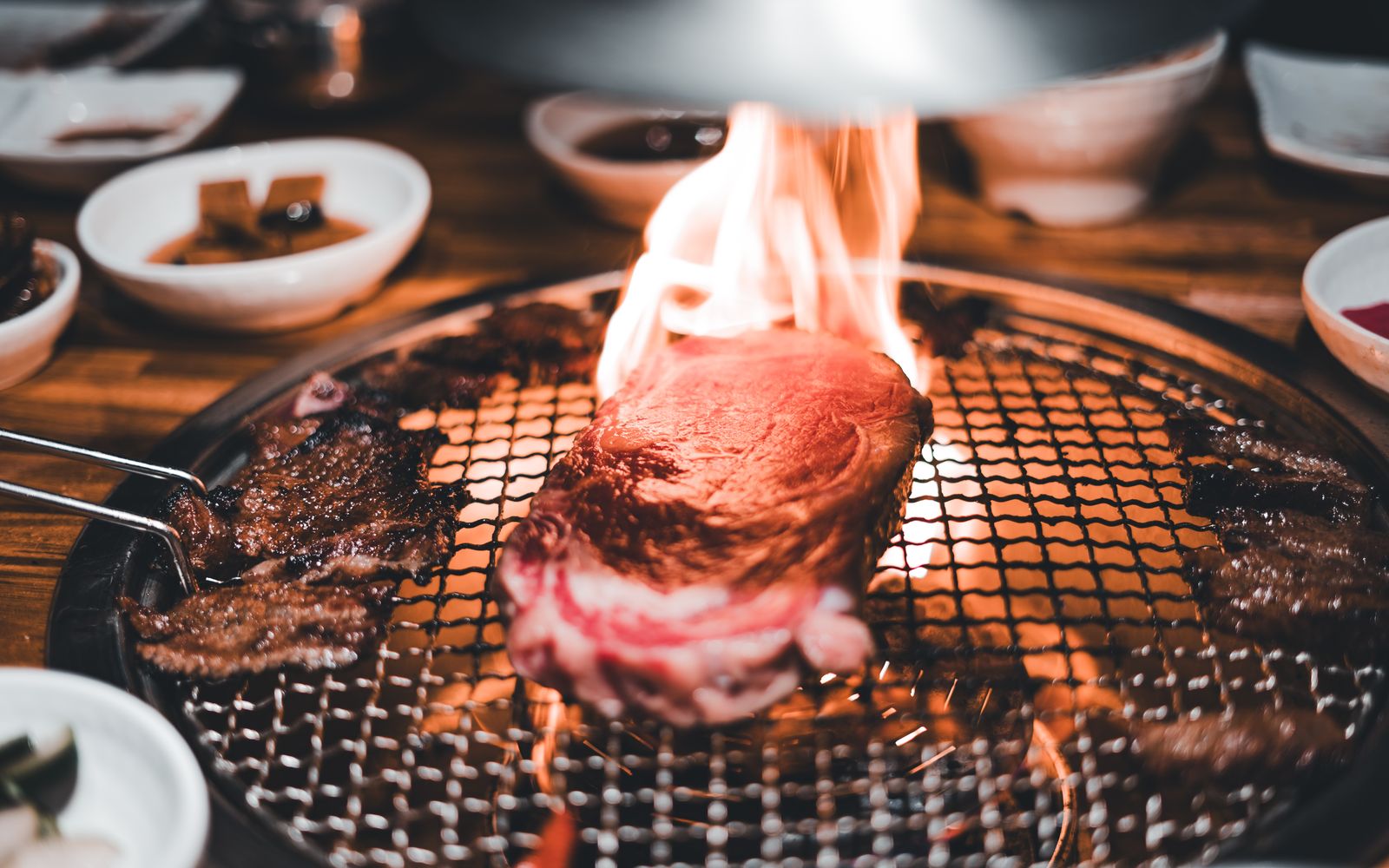
The short answer: Food almost always sticks because the grate is not hot enough yet. A cold grate lets the protein in the meat bond with the metal instead of forming a crust that releases. Preheat the closed grill properly for 10 to 15 minutes, oil the food (not the grate) thinly and only turn it when it lifts easily. Then it releases almost by itself.
Few things are more annoying than trying to turn a nice steak or fish fillet and finding that half of it stays stuck to the grate. You are left with a shredded piece of food and a crusted patch on the grill. The good news: sticking almost always has the same few causes, and all of them can be avoided. This guide explains why food sticks, how the protein release effect works and which techniques let meat, fish and vegetables come away cleanly from the grate.
Why does my food stick to the grate in the first place?
Sticking is not chance, it is chemistry. Meat, fish and many vegetables contain a lot of protein. When this protein meets hot metal, it changes its structure and forms a crust. On a properly hot grate this crust becomes firm and separates cleanly from the metal, so the food releases almost by itself. On a grate that is too cool, on the other hand, the protein forms a sticky bond with the surface before a crust can develop. That is exactly when everything tears as you turn it.
The four most common causes at a glance:
- The grate is not hot enough, by far the most common reason.
- You turned it too early, because the crust was not finished yet.
- The grate is not clean or not seasoned, because old residues act like glue.
- There is no thin film of oil, which reduces the friction between food and metal.
Is my grate really hot enough?
Most sticking problems disappear simply by preheating for longer and properly. A common mistake: the grill already shows heat at the top, but the bars of the grate themselves are still lukewarm. Yet those are exactly what touches the food.
Here is how to go about it:
- Close the lid and preheat for 10 to 15 minutes. Only then is the mass of the grate heated through, not just the air above it.
- Aim for a high temperature. For searing, around 230 to 260 °C at the cooking surface is ideal. A quick hand test at a safe distance above the grate gives you a feel for it: if you cannot hold your hand there for two seconds, it is hot enough.
- Only then put the food on. A clearly audible, strong sizzle as it goes on is a good sign, because it means the crust starts immediately.
How to create hot and cooler zones on purpose is explained in the guide using direct and indirect heat correctly.
Why you turned too early: the protein release effect
The most important trick costs nothing: patience. When you put a steak or fillet on, it sticks to the grate at first, which is completely normal. At that moment the crust has not formed yet. If you force the turn now, you tear the meat.
Instead, wait for the protein release effect: once the crust is finished, the food releases from the grate by itself. The check is simple: carefully lift a corner with the tongs. If it still sticks, it is too early, so give it another minute. If it lifts without resistance, you can turn it. For a steak this often takes 2 to 4 minutes per side, depending on thickness. Also, turning once is usually enough, because constantly pushing it back and forth costs you crust and invites sticking all the more. More on this in the steak guide.
Do I need to oil the grill grate, and how do I do it properly?
A thin film of oil helps, but in the right place. Oil the food, not the grate. Oil that you brush onto the glowing hot grate burns within seconds into bitter, sticky residues and smokes heavily. A very thin film directly on meat, fish or vegetables, on the other hand, stays where it works.
What matters is a heat-stable oil with a high smoke point: rapeseed, sunflower, peanut or refined olive oil can handle the high temperatures. Extra virgin olive oil or butter, on the other hand, burn early and turn bitter. And really use only a little, because too much oil drips into the embers and can cause flare-ups. How to avoid grease fires safely is covered in the guide grease fires on the grill.
A clean, seasoned grate: the invisible foundation
Even the hottest grate sticks if charred leftovers from last time are still sitting on it. These residues act like barbs. So the rule is: let the grate get hot before grilling and scrub it clean with the grill brush. Burnt-on bits turn to ash in the heat and brush off easily.
A well-kept cast iron grate develops a patina over time, a thin, baked-on layer of fat that works similarly to a non-stick coating. You should therefore season new or freshly scrubbed cast iron grates: rub them thinly with heat-stable oil and heat them strongly several times. The complete step-by-step instructions and the differences between cast iron, stainless steel and enamelled grates are in the grill grate guide.
Why does fish stick especially badly, and what helps?
Fish is the classic candidate for sticking: very high in protein, with little fat of its own and delicate flesh. Here the grate forgives no mistakes. The rules are the same as above, only stricter:
- The grate must be very hot, clean and oiled.
- Oil the fish skin thinly and place the fillet on skin side down, because the skin protects the flesh.
- Do not touch it until it releases. Only turn it when a corner lifts easily.
- For very delicate fish, a soaked cedar plank, a fish spatula or a special fish clamp helps keep it from falling apart.
Quick fix: what to do if it is already sticking?
If you feel resistance when turning, stop pulling. Force tears the food. Instead, wait 30 to 60 seconds longer, because the piece often does release after all as the crust finishes in that time. In addition, slide a thin, flat grill spatula flat under the food and work your way along slowly instead of pulling from above. If something has stuck anyway, scrub the spot clean straight away while the grate is still hot, which stops the next piece from sticking to the same spot again.
When is a new grate worth it instead of constant frustration?
If everything keeps sticking despite preheating, oiling and patience, a worn-out grate may be the cause: rusted-through cast iron without a patina, or an enamelled grate with chipped coating, simply no longer offers a clean surface. In that case, replacing it makes more sense than any further trick, and a good grate lasts many years with proper care. Which material suits your grill and your style of grilling is shown in the grill grate guide; and if you are already thinking about a new grill, the grill finder helps you choose.