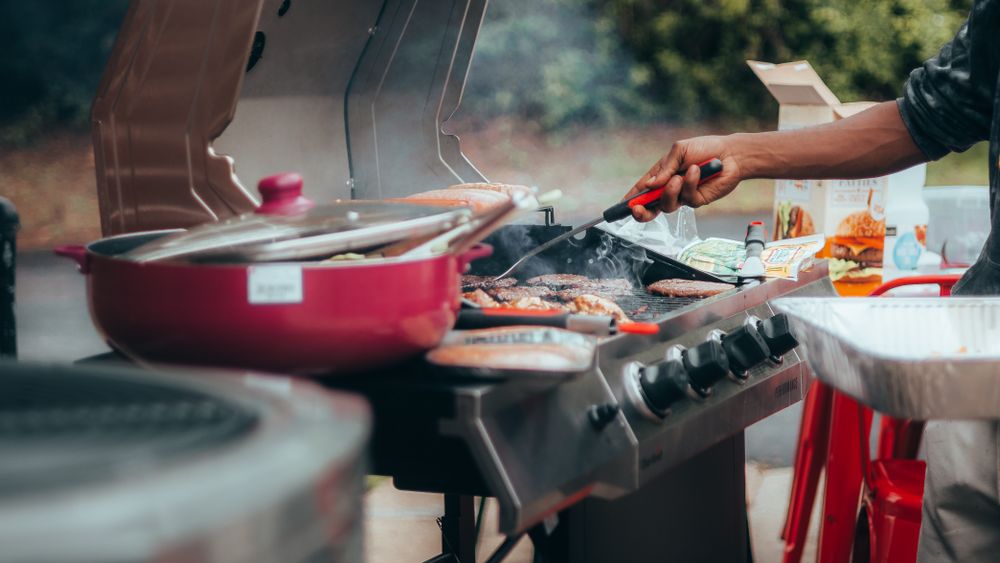
The short answer: To get vegetables crisp-tender instead of burnt or raw, you need three things: the right cut, a thin film of oil and medium, controlled heat. Delicate types go briefly over direct heat, while firm types cook more gently at the edge. Turn only once and salt watery vegetables only at the end.
Vegetables are often seen as a second-choice side dish when grilling, yet they are one of the most rewarding things you can put on the grate. The roasted flavours that develop on the grill turn a plain courgette or pepper into something a pan cannot quite match. Even so, vegetables often end up on the plate either charred black or still hard and firm inside, and the small pieces vanish between the bars of the grate. The good news: all of this can be solved with a few simple steps. It is almost never about expensive accessories, but about cut, oil, heat and timing.
Which vegetables are suitable for grilling?
In principle almost any vegetable can be grilled, but not every one in the same way. Watery types such as courgette, aubergine or pepper brown quickly and nicely over direct heat. Firm, starchy types such as potatoes or carrots take longer and more patience, otherwise they burn on the outside while the core stays raw. Very small or delicate types fall through the grate easily and are better off on a griddle plate or in a grill basket.
This overview gives rough rule-of-thumb values for medium heat:
| Vegetable | Suitability | Best method / cooking time rule of thumb |
|---|---|---|
| Courgette | very good, straightforward | sliced lengthways, direct, about 6 to 10 minutes |
| Pepper | very good, aromatic | in quarters, direct, about 8 to 12 minutes |
| Aubergine | good, soaks up oil | in slices, direct, about 8 to 12 minutes |
| Mushrooms | good, small | grill basket or skewer, about 8 to 10 minutes |
| Corn on the cob | good, robust | direct and indirect, about 15 to 20 minutes |
| Asparagus | very good, quick | across the grate or in a basket, about 6 to 10 minutes |
| Potatoes | firm, need patience | parboil, then indirect, about 20 to 30 minutes |
| Carrots | firm, sweet | parboil or indirect, about 15 to 25 minutes |
| Cherry tomatoes | delicate, burst | skewer or foil parcel, about 5 to 8 minutes |
| Onions | good, sweet | thick rings or wedges, about 10 to 15 minutes |
The times are deliberately given as ranges, because the thickness of the pieces, the type of grill and the weather noticeably shift the result. In the end, rely on your eyes and a fork test, not on the clock alone.
Preparation: cutting, oiling, seasoning
The most important step happens before the grill. Cut vegetables so that the pieces are big enough not to fall through and thin enough to cook through in a reasonable time. Courgette and aubergine are best cut lengthways into slices about half a centimetre to one centimetre thick. Quarter peppers and remove the inner membranes so they lie flat. An even thickness is crucial, because only then do all the pieces cook at the same pace.
Oil is not an extra but a must. A thin film of oil stops the vegetables sticking to the grate, transfers heat more evenly and helps the roasted flavours along. What matters is to use it sparingly and evenly, ideally with a brush or by briefly tossing the vegetables in a bowl with oil. Too much oil drips into the coals and causes flames that char the vegetables from the outside. A heat-stable oil such as rapeseed or sunflower oil is more practical than extra virgin olive oil, which burns sooner.
When seasoning, it pays to think about timing. You can apply dry spices and herbes de Provence beforehand, and a homemade BBQ rub that you mix yourself goes very well with corn, peppers and onions. Salt, on the other hand, draws moisture out of watery vegetables. In practice, courgette and aubergine turn out drier and so brown better if you salt them only shortly before putting them on or only afterwards. Fresh herbs such as basil or parsley go on after grilling anyway, otherwise they burn.
How do I stop vegetables falling through the grate?
The shortest answer: cut bigger, grill lengthways rather than diced, and use a solid surface for anything small. Cherry tomatoes, mushrooms and pieces of onion belong on a skewer, in a grill basket or on a griddle plate, never loose on a wide grate.
The most common mistake is to dice vegetables as you would for a pan. On the grill the opposite is right: long, flat pieces lie stably across the bars and are easy to turn with tongs. A close grate with thin bars helps further, which is why it is worth a look at the grill grate guide if you often grill vegetables. Lay asparagus spears across the direction of the bars, then they will not roll in. And anyone who regularly grills a lot of small pieces will hardly get around a grill basket or griddle plate.
Direct or indirect heat for vegetables?
Both have their place, and the trick lies in combining both zones. With direct and indirect heat you have two tools in one grill. Delicate, watery types such as courgette, pepper, aubergine and asparagus need direct heat for the nice sear marks, but only briefly. Firm types such as potatoes, carrots or whole onions cook through best slowly over indirect heat, otherwise the skin is black before the core turns soft.
In practice, setting up zones works well. Create a hot, direct zone for browning and a calmer, indirect zone for finishing and keeping warm. That way you can first brown vegetables over the direct zone and then move them to the edge to cook through, while the next batch gets colour at the front. What matters is medium, controlled heat rather than maximum glow. If it is too hot, the sugar in the vegetables caramelises too quickly into bitter compounds, and that is exactly the cause when everything is black outside and still raw inside. If you are unsure how well your grill holds each zone, a look at the grill simulator can help you judge.
Accessories: grill basket, plancha, skewers and parcels
There are a few helpers for vegetables that make the difference between frustration and enjoyment. None of them is expensive, and you do not need them all at once.
- Grill basket: The classic for anything small and fragile. Mushrooms, cherry tomatoes, onion wedges and asparagus stay in place inside it, and you turn the whole contents in one movement. Oil the basket before filling it.
- Plancha or griddle plate: A closed surface of cast iron or steel. Ideal for very small or juicy vegetables that would otherwise fall through or burn. The plate distributes heat more evenly and produces all-over browning instead of individual stripes.
- Skewers: Handy when you want to serve mixed vegetables together. Take care to put types with a similar cooking time on one skewer, otherwise the pepper is perfect and the onion still raw. Soak wooden skewers beforehand so they do not burn.
- Foil and parcels: For firm types such as potatoes, or for vegetables that should steam rather than roast. The parcel protects from direct heat and holds in moisture, though at the expense of the roasted flavours. A good compromise: cook until soft in the parcel first, then put them briefly on the open grate for colour.
Which accessories suit your grill and your way of cooking depends heavily on how often and how much vegetable you grill. If you are still building up your kit, the Grill Finder is a good starting point for narrowing down suitable accessories.
Conclusion
Grilling vegetables is easier than its reputation suggests. Cut large and even, oil thinly, salt watery types late and work with medium heat over two zones. For anything small there is the grill basket, griddle plate or skewer, so that nothing falls through the grate. If you keep these points in mind, you will get more out of every courgette and pepper than from any pan. You will find suitable accessories at a glance under grill accessories compared.