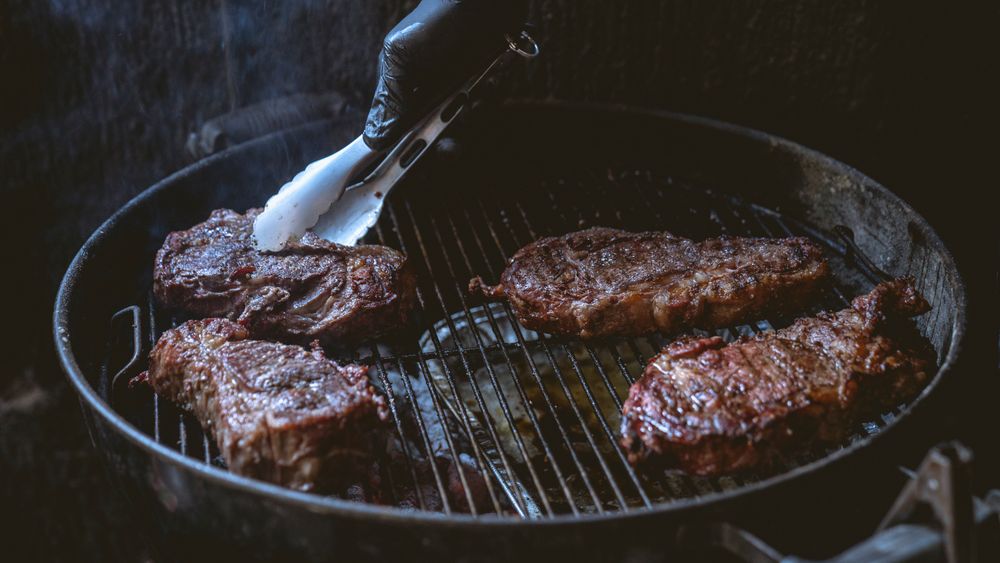
The short answer: In most cases the cause is damp or swollen pellets or a nearly empty hopper. First check that enough dry pellets are feeding through and that the burn pot is free of ash. That fixes the majority of starting problems. If the grill shows an error code such as “Err” or “LEr”, it points to a temperature that is too low or a flameout.
The grill is supposed to be running, the guests are waiting, and right now the display stays black, an error code flashes or the flame goes out again after a short time. That is annoying, but with pellet grills it is almost always harmless and you can solve it yourself. In this guide you go through the most common causes one by one: from the simplest (pellets) to the technical components such as the igniter and fan. At the end you will find a safe step-by-step restart guide.
Why won’t my pellet grill start?
A pellet grill is basically simple: an auger carries pellets from the hopper into the burn pot (firepot), a glowing igniter lights them, and a fan stokes the embers. If one of these links fails, the grill does not start or the flame goes out again.
The most common causes, in the order you should check them:
- Empty or nearly empty hopper: the auger only moves air.
- Damp or swollen pellets: they ignite poorly and clump together.
- Clogged auger: often caused by sawdust from swollen pellets.
- Sooted burn pot: too much ash prevents ignition and air supply.
- Faulty igniter: it no longer gets hot enough.
- Weak or blocked fan: the embers get too little air.
Work from top to bottom. In the vast majority of cases you are done after the first three points.
What do error messages such as “Err” or “LEr” mean?
Error codes differ from brand to brand, but they follow a common logic. They almost always signal a temperature problem:
- “Err” / “ErH” / “ErL”: The temperature sensor reports an implausible or too low value, so the grill does not reach ignition temperature.
- “LEr” (Low Error): The classic sign of a flameout: the temperature has dropped below a threshold because the flame has gone out.
- Flashing display with no response: more likely a power or electronics problem (see the last section).
So an error code is not a diagnosis but a symptom. The actual cause almost always lies in the pellets, burn pot or igniter. The exact meaning of your code is in the manual for your model, so take a look if in doubt.
Are the pellets to blame?
This is by far the most common cause, and the quickest to fix.
Check the fill level: Look into the hopper. If it is less than a quarter full, the auger may no longer be picking up pellets. Refill it.
Spot moisture: Take a handful of pellets. Good pellets are hard, smooth and shiny and snap with a clean crack. If they feel soft, crumble to dust or are visibly swollen, they have absorbed moisture. Such pellets ignite poorly, produce hardly any heat and clog the auger.
Important: Never try to “grill dry” damp pellets. Throw them away and refill with dry pellets. Store pellets airtight and dry, not open in the hopper and not in a damp garage. It is better to empty the hopper completely after the season.
If you are still unsure which pellets suit your appliance and your grilling style, the overview in our pellet grill category will help.
Clogged auger: how to clear it
If you have dry pellets in the hopper but none are arriving in the burn pot, the auger is stuck. The cause is usually sawdust from broken-down pellets or a single wedged pellet.
- Switch the grill off and pull the mains plug. This is mandatory for any work on the mechanics. The auger must not start while your hand is in the hopper.
- Empty the hopper. Vacuum out the remaining pellets and the sawdust. Many appliances have a flap at the bottom that lets you empty the hopper completely.
- Visual check. Look into the auger channel. You can carefully loosen clumped sawdust with a long screwdriver or a bottle brush.
- Refill and do a trial run. Plug the grill in, start the ignition cycle and watch whether pellets drop into the burn pot after a few minutes.
If the auger does not start at all (no humming, no movement), the auger motor may be faulty. That is a spare-part case.
Faulty igniter or sooted burn pot?
If pellets arrive but do not ignite, the problem lies with the ignition system or the burn pot.
Clean the burn pot (firepot): The most common culprit. A burn pot filled with ash and charred pellets gets neither enough heat from the igniter nor enough air. Vacuum it out completely with the grill cold and unplugged. Make sure the small air holes in the base are clear.
Check the igniter: The igniter (glow igniter) sits at the side, in or on the burn pot. Start the grill with the lid open and see whether the rod glows red after about a minute. If it stays cold, it has probably burnt out. It is an inexpensive spare part that you can usually replace yourself.
Safety warning, flameout: If the flame goes out while pellets were still being fed, unburnt pellets collect in the burn pot. A later ignition attempt can then cause a flashback (deflagration). Empty the burn pot before every restart and always ignite with the lid open until a stable flame is burning.
Check the fan (blower)
The fan stokes the embers and keeps the flame alive. If the grill starts but keeps going out, or smokes heavily without a proper flame, the blower may be the problem.
- Listen test: After switching on, you should hear a clear, steady rushing sound. If it stays silent, the fan is getting no power or is blocked.
- Clear a blockage: Ash, grease or a foreign object can hinder the fan wheel. Clean it carefully with the grill unplugged.
- Too much smoke, no flame: a typical sign of too little air, usually the fan or clogged air holes in the burn pot.
A thoroughly clean interior prevents almost all of these problems. Our guide to cleaning your grill shows you how to get your grill properly clean. The principles apply equally to a pellet grill.
Step by step: the safe restart
Once you have narrowed down the cause, this is how you restart cleanly:
- Cool down and unplug. Never work on a hot or plugged-in grill.
- Empty the burn pot. Vacuum out unburnt pellets and ash completely. This is mandatory after every flameout.
- Make sure the pellets are dry. Remove damp ones, add fresh dry pellets.
- Open the lid. Ignition always runs with the lid open, to avoid deflagrations.
- Start the ignition cycle. Watch whether the igniter glows, pellets feed through and a flame forms after 3 to 8 minutes.
- Let it burn stably, then close the lid. Only once an even flame and smoke are present do you close the lid and set the target temperature.
Once you start grilling, our core temperature chart helps you get perfect results, so waiting for the right timing becomes child’s play.
When is a new grill worth it instead of a repair?
Igniter, fan, auger motor and temperature sensor are inexpensive spare parts for most brands, often replaceable yourself, so a repair is almost always worthwhile. It gets more critical if the hopper or the fire box has rusted through, the electronics keep misbehaving or spare parts for an old model are no longer available. In that case buying a new one is often the more sensible choice.
If you are thinking about a new appliance anyway, our grill finder helps you quickly find a suitable model for your needs, and the pellet grill category gives you the current recommendations at a glance.