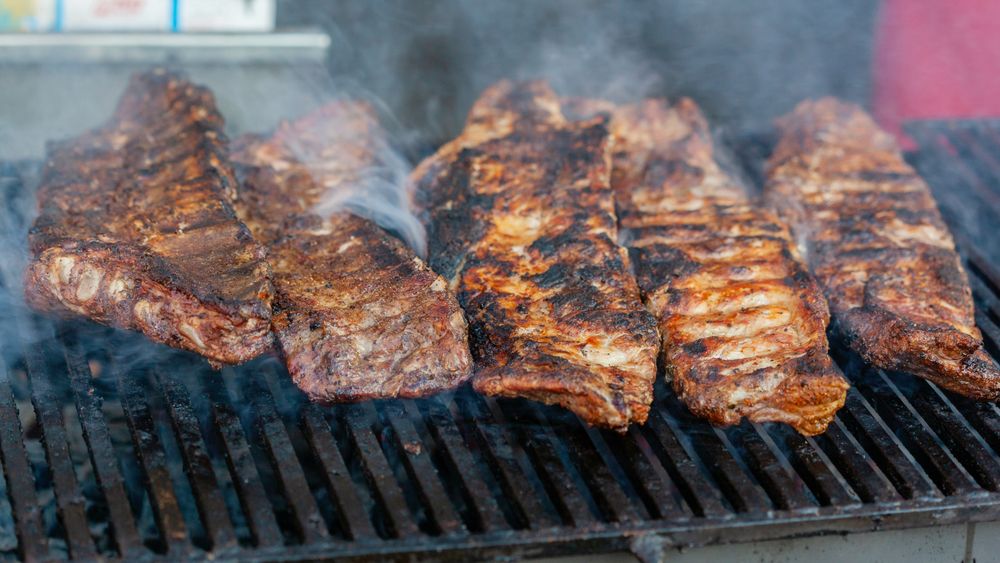
The short answer: The most reliable way to grill steak is with a core temperature thermometer instead of a clock: sear over direct heat (2 to 4 minutes per side depending on thickness) or reverse sear thick cuts. Medium is 55 to 57 °C. Take the meat off the grate 2 to 3 °C early and let it rest for 3 to 5 minutes.
Grilling a good steak is not a matter of luck but of technique and timing. The most common mistakes: putting it on too cold, turning it too early, cooking by time instead of temperature, and not resting it. This guide shows you both common methods, classic searing and reverse searing, with concrete times and target temperatures.
What grill temperature do you need for steak?
For the classic method you need maximum direct heat: on a gas grill at least 250 to 300 °C at the grate surface, on a charcoal grill a dense, white-grey layer of embers. Only at such high heat does the Maillard crust form before the inside overcooks.
A gas grill with several burners is ideal for this, because you can set one zone to full power and keep a second zone cooler, for reverse searing or for keeping food warm. How to divide zones in general is explained in the guide to direct and indirect heat. You will find an overview of suitable appliances in the gas grills category.
Grilling steak by thickness: the times table
Times are guideline values for direct heat at a grate temperature of approx. 280 °C. The actual cooking time depends on meat thickness, starting temperature and fat content. So always check with the thermometer.
| Thickness | Method | Time per side (medium) | Core temperature |
|---|---|---|---|
| 2 cm | Classic, direct | 2 to 3 min. | 55 to 57 °C |
| 2.5 to 3 cm | Classic, direct | 3 to 4 min. | 55 to 57 °C |
| 3.5 to 4 cm | Reverse sear recommended | 60 to 90 sec. sear + 20 to 30 min. indirect | 55 to 57 °C |
| over 4 cm (tomahawk, thick rump steak) | Reverse sear | 90 sec. sear + 30 to 40 min. indirect | 55 to 57 °C |
From a thickness of around 3.5 cm, the classic method becomes risky: by the time the crust on the surface is right, the centre is often already overcooked. From this thickness on, reverse searing almost always pays off.
What is reverse searing, and when is it worth it?
With reverse searing, the steak first cooks slowly over low indirect heat almost to the target temperature and is then seared briefly, so the order of the classic method is reversed. The advantage: the meat cooks perfectly evenly from edge to edge, without the grey “transition ring” between crust and pink centre that you often see on thickly cut, classically grilled steaks.
Here is how to do it:
- Bring the steak to room temperature: Take it out of the fridge 30 to 45 minutes before grilling.
- Cook indirectly first: Place it on the cooler grill zone at 100 to 120 °C and insert a core temperature probe.
- Remove it at the target minus 8 to 10 °C: For medium (target 55 to 57 °C), take it off the indirect zone at approx. 46 to 48 °C.
- Bring the grill to full heat: All burners, or the direct zone, to maximum.
- Sear it: 60 to 90 seconds per side, until the crust is deep brown and the target temperature minus 2 to 3 °C is reached.
- Let it rest: 3 to 5 minutes before cutting.
Classic grilling: the quick method for thinner steaks
For steaks up to about 3 cm thick, the classic method is faster and gives equally good results:
- Bring the steak to room temperature and pat it dry: Moisture on the surface prevents the crust.
- Season: Coarse salt and pepper, ideally 40 to 60 minutes beforehand or right before it goes on the grill.
- Place it on the hottest zone, keeping the lid open for the maximum searing effect.
- Turn it after half the time: Turn only once, as frequent turning prevents the crust.
- Check the core temperature from the second minute per side, until the target minus 2 to 3 °C is reached.
- Take it off the grate and let it rest for 3 to 5 minutes.
How long does a steak need to rest?
Steaks up to 3 cm thick need 3 to 5 minutes of resting time, thicker cuts and tomahawks up to 8 minutes. The reason: during grilling, the muscle fibres contract and push liquid towards the centre. When the meat rests, the fibres relax again and the juice redistributes evenly. If you cut into it straight away, you lose a noticeable part of the meat juice on the board instead of in the bite.
Cover loosely with aluminium foil, do not wrap tightly, otherwise the crust softens from the trapped steam.
Which core temperature for which doneness?
The core temperature is the only objective indicator of doneness. Times are always just approximations. Take the steak off the grate 2 to 3 °C before the target value, because residual heat keeps raising the temperature while it rests.
| Doneness | Core temperature when taking off | After resting |
|---|---|---|
| Rare | 48 to 50 °C | 50 to 52 °C |
| Medium rare | 51 to 52 °C | 53 to 54 °C |
| Medium | 53 to 54 °C | 55 to 57 °C |
| Well-done | 58 to 60 °C | 60 to 63 °C |
You will find the full overview of all meat types, doneness levels and the residual heat rule in detail in the core temperature chart. Always measure at the thickest point without hitting veins of fat, and for flat steaks insert the probe from the side.
Common mistakes when grilling steak
- Cold meat straight from the fridge: The centre takes longer, and the outside overcooks in the meantime.
- Salted too early and left standing (5 to 30 minutes): The salt draws out water that sits on the surface and prevents the crust. Either salt much earlier (40 to 60 min.) or only right before grilling.
- Constant turning: Turning once is enough for the classic method. More movement costs you crust.
- Cooking by time instead of core temperature: The only reliable method is the thermometer.
- Not resting: Cutting straight away lets the meat juice run out.
Conclusion: technique beats timetable
A perfect steak does not depend on a rigid number of minutes, but on three adjustments: the right method for the thickness, a reliable core temperature thermometer and the patience to let the meat rest. Grill thin steaks classically over high heat, reverse sear thick cuts. Both reliably get you there if you go by temperature instead of the clock.